
What constitutes reality and what constitutes a dream in the mental universe of Elizabeth Holmes? And to what extent is her story inseparable from the mythology of Silicon Valley?
At the centre of Nathan Fielder’s extraordinary film is the founder and CEO of the health technology company Theranos, and the final 34 days before she begins serving her prison sentence in Texas.
A tower of insights, experiences and opinions
Art in all forms. That is what we are all about - and now you can join our world. We need you - and we believe you need us too. Let us share dreams and visions!
A film crew is invited into Elizabeth’s home, a rented house in San Diego, California. Fielder, the film’s director, effectively moves into the guest bedroom for the duration of those 34 days.
Thoroughly prepared, he proves an exceptional interviewer, capable of combining empathy with critical scrutiny. Inevitably, he develops a complex bond with the woman convicted of fraud and her young family.

Who the *?#% is this band? 1st single, apparently: Mama's Baby!
The album in physical form can be purchased solely at vinyl store Beat, Enghave Plads, Copenhagen.
The film’s 174 minutes consist predominantly of conversations and richly nuanced close-up portraits. Faces become narratives in themselves, revealing layers of emotion, uncertainty and contradiction.
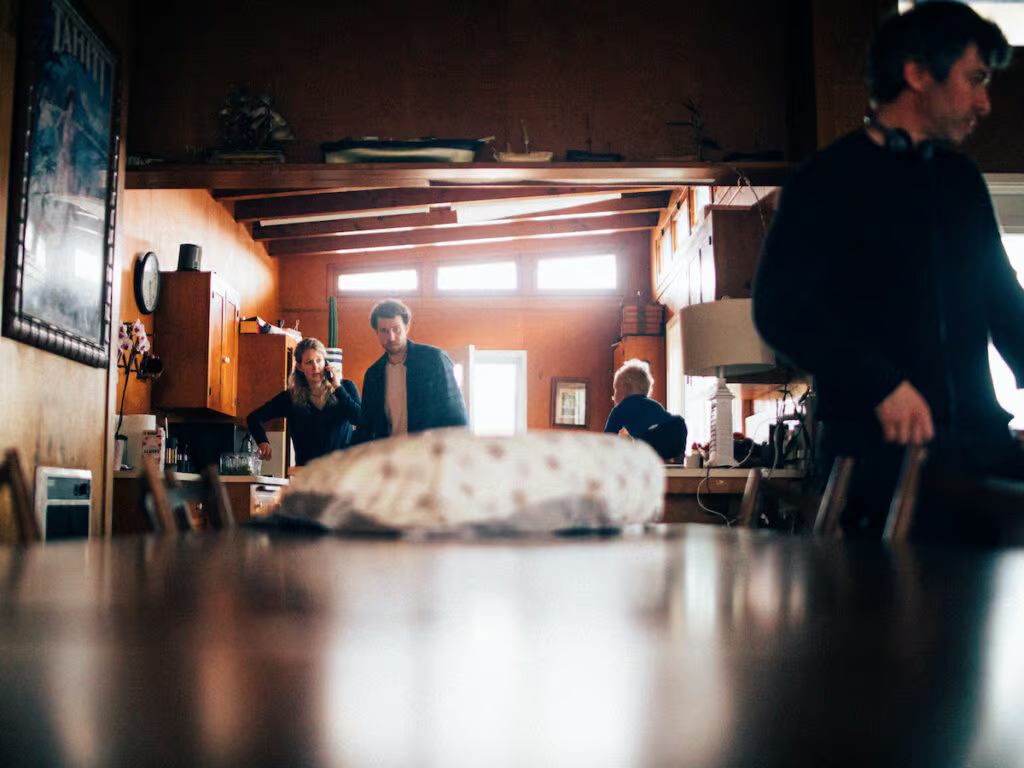
At the heart of this cinematic exploration are Elizabeth, her partner Billy Evans, Nathan Fielder and, in a significant supporting role, the actress Amanda Seyfried.
Silicon Valley and the Architecture of Dreams
Silicon Valley and its surrounding mythology provide an essential backdrop to the story of Elizabeth Holmes.
Since the 1970s, the region has established itself as a global centre of technological innovation, particularly within computing, attracting some of America’s brightest minds. Stanford University, where Holmes studied before embarking on her entrepreneurial adventure, occupies a central position in forging strategic relationships with industry and nurturing visionary entrepreneurs.
Silicon Valley is also a culture hungry for female entrepreneurial icons in industries historically dominated by men. Physical attractiveness, one might add, hardly constitutes a disadvantage
The region’s economic influence has grown considerably over the subsequent decades. Between 2015 and 2024, Greater Silicon Valley accounted for an average of approximately 40 per cent of annual US venture capital investment. Despite a degree of decentralisation, the region remains the country’s dominant hub for venture capital.
Yet Silicon Valley is considerably more than an incubator and launchpad for ambitious start-ups. It is also a mythology.
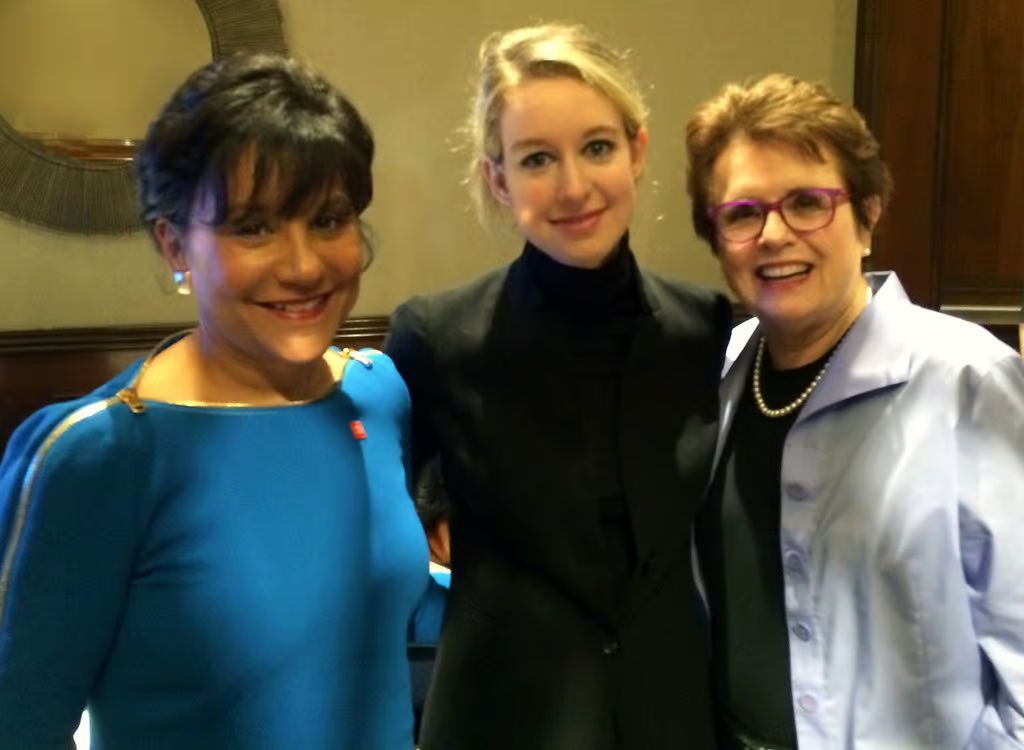
A dreamlike universe in which imagination and utopian visions coexist. A place where a compelling idea can attract extraordinary amounts of capital, provided it is communicated with sufficient conviction, charisma and passion.
It is also a culture hungry for female entrepreneurial icons in industries historically dominated by men. Physical attractiveness, one might add, hardly constitutes a disadvantage.
Elizabeth Holmes fitted this narrative remarkably well.
The Rise and Collapse of an Extraordinary Vision
Holmes was undoubtedly driven and energised by a vision and a dream. Whether money and power were equally important motivations cannot be ruled out, but neither can it be established conclusively.
Following the founding of Theranos in 2003, the company experienced a remarkable ascent. Billions in investment eventually poured in. Elizabeth appeared charismatic and assured, both in television interviews and before her employees.
Her paper fortune ran into billions. She was both chair of the board and chief executive, while her chief operating officer, Ramesh ‘Sunny’ Balwani, was secretly also her romantic partner.
The illusion, however, came crashing down. Brutally.
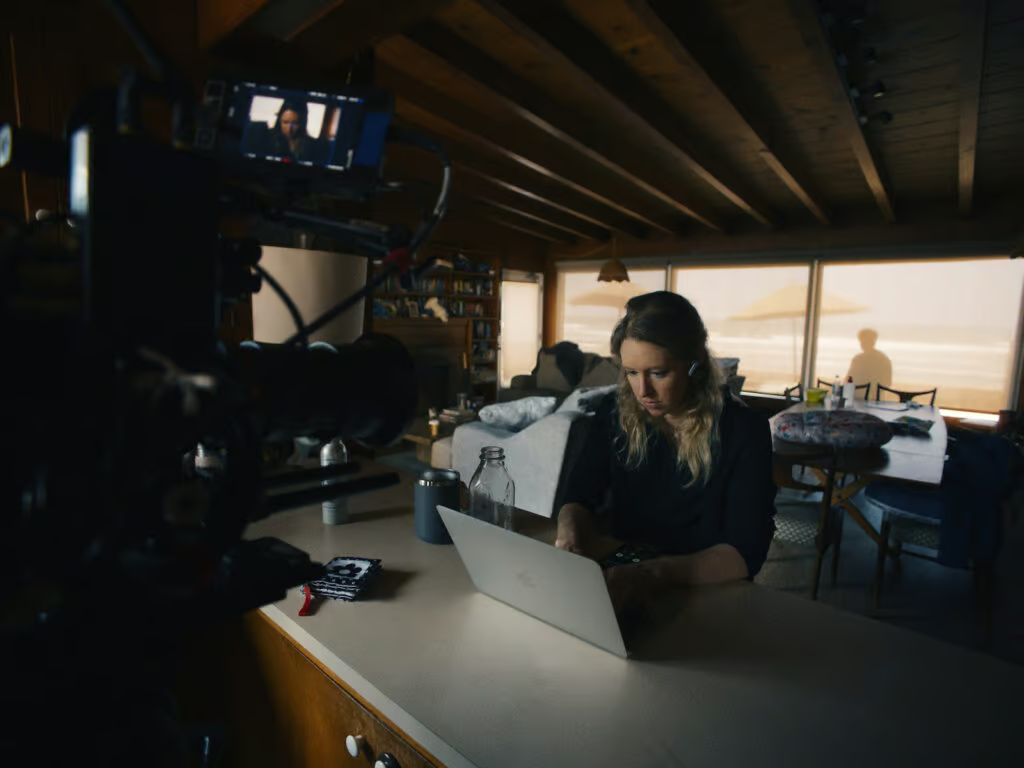
Theranos was unable to fulfil its promise of a revolutionary, iPod-sized device capable of performing multiple diagnostic blood tests.
The technology worked only in theory, in spirit, in dreams and on the wings of faith.
Then came the lawsuits, claims for damages, devastating media coverage, four criminal convictions and a prison sentence of more than eleven years.
Amanda Seyfried and the Emotional Enigma of Elizabeth Holmes
There are remarkably few actors in You Can See Everything. Christopher Abbott portrays Billy in a handful of sequences, while Amanda Seyfried plays Elizabeth in scenes depicting her early youth and in reconstructions of the period following her imprisonment.
Seyfried’s performance raises an intriguing question.
Are we witnessing exceptionally accomplished method acting, or does the actress herself become drawn into the mystique and the numerous unanswered questions surrounding Elizabeth Holmes?
I find it almost impossible not to experience a peculiar sense of sympathy and concern for, this dreamy, charmingly naïve woman who appears to inhabit an innocent, trusting and philanthropic parallel universe
To this reviewer, she appears genuinely emotionally affected. It makes a powerful impression.
For Elizabeth has that effect on people.
The following observations are entirely my own, made perhaps more as an observer of human nature than as a film critic.
I find it almost impossible not to be fascinated by, and experience a peculiar sense of sympathy and concern for, this dreamy, charmingly naïve woman who appears to inhabit an innocent, trusting and philanthropic parallel universe.
Is Nathan himself playing a role?
Perhaps, perhaps not. I do not experience him as doing so, but every member of the audience must ultimately arrive at their own conclusion.
Billy Evans: Love, Loyalty and the Question of Control
Elizabeth’s partner, Billy Evans, constitutes another fascinating psychological portrait.
He emerges as her knight and protector, someone who appears to share her vision and remains devoted to her. Yet he also seems to harbour ambitions and agendas of his own.
These become apparent when he presents Fielder with an ultimatum, demanding a share of the film’s earnings, and later when he introduces the idea of allowing Elizabeth to ‘live on’ during her imprisonment through an AI-generated version of herself.
The virtual Elizabeth is intended not only for their children but also for the wider public.

Billy pulls the strings, orchestrating her digital presence in videos and on enormous billboards in public spaces while she remains behind prison walls, possibly without her knowledge or consent.
There is something undeniably romantic about the couple’s conversations about building ‘monuments to love’ for one another every day. In Billy’s case, however, the boundaries between devotion and control appear increasingly fluid.
Evans’s company Haemanthus introduces another dimension to this relationship. Elizabeth is allegedly advising him unofficially from her prison cell, the ambition being to develop what might effectively constitute a version 2.0 of Theranos’s miraculous device.
Does Billy exercise some form of power over Elizabeth? Or are we simply witnessing an extraordinary degree of unconditional and uncompromising loyalty?
Nathan Fielder and the Art of Human Observation
Through television productions such as Nathan for You and The Rehearsal, Nathan Fielder has spent years exploring the boundaries of reality television.
His work has evolved into a distinctive form of social and psychological experimentation. He constructs situations that challenge people’s everyday routines, reflexes and the protective shields they erect between themselves and the outside world.
His underlying ambition appears to be the cultivation of more authentic human relationships and a more complete sense of self.
We become potential judges in our own right, invited to navigate the uncertain territory between fiction and reality, perception and evidence, and ultimately between justice and truth
It is a mission pursued against the backdrop of a culture characterised by relentless acceleration, superficiality and deeply ingrained human defence mechanisms.
In You Can See Everything, this artistic mission reaches its apex to date.
Fielder is a maestro of emotional inquiry. He occupies a remarkable dual position within the film: that of a concealed auteur and, equally, that of a participant in the documentary narrative.
Not once does he cast a knowing glance towards the camera. Beyond his critical and empathetic questioning, he places himself on an equal footing with the other participants.
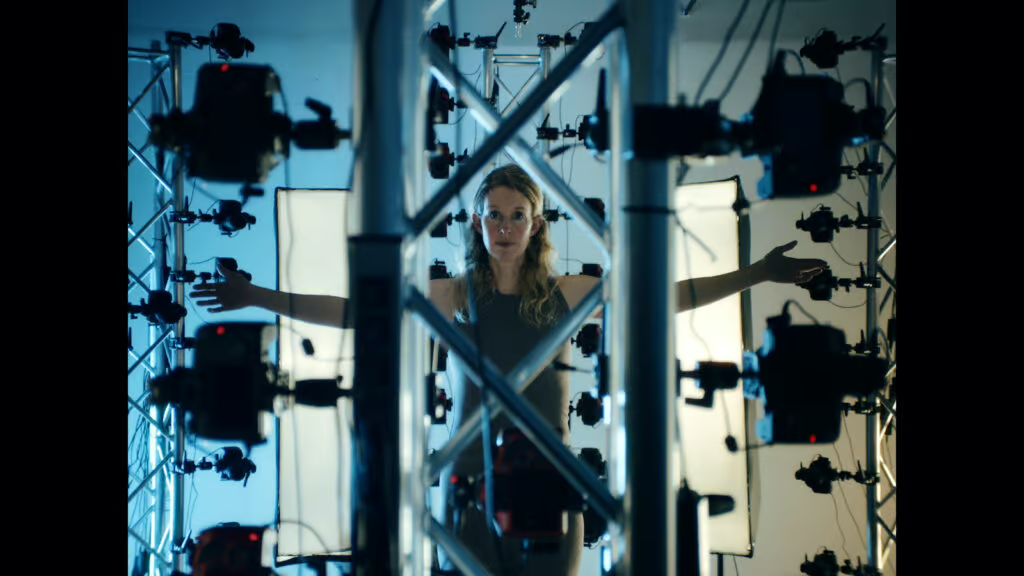
He is an eyewitness, yet he refrains from presenting his own interpretations through explicit or speculative statements addressed to the camera.
Instead, his method transforms the audience into eyewitnesses.
We become potential judges in our own right, invited to navigate the uncertain territory between fiction and reality, perception and evidence, and ultimately between justice and truth.
It is a remarkably powerful cinematic achievement.
Individual Guilt and Collective Delusion
You Can See Everything is intensely intimate in its human portraits and deeply alarming in its underlying metanarrative.
As viewers, we find ourselves divided in our perception of Elizabeth Holmes. Feelings of sympathy, concern and compassion inevitably surface.
How much responsibility rests with the individual, and how much with a culture that celebrates visionaries, rewards extraordinary promises and invests billions in the possibility of turning utopia into reality
At the same time, we must confront the monstrous scale of the wrongdoing perpetrated by Holmes and Theranos, and its potentially devastating consequences for patients.
The film does not resolve this contradiction. Nor should it.
Beyond the question of individual criminal responsibility lies a broader and perhaps equally disturbing question.
Is Elizabeth Holmes to be understood solely through the prism of her own guilt, or is she also the embodiment of – and an extreme symptom of – the delusions of grandeur and the quasi-pathological culture embedded within the mythology and modus operandi of Silicon Valley?
How much responsibility rests with the individual, and how much with a culture that celebrates visionaries, rewards extraordinary promises and invests billions in the possibility of turning utopia into reality?
These are questions we must feel our way through as the film unfolds, and continue to reflect upon long after the credits have rolled.
For several days afterwards, the film continued to revolve in this reviewer’s mind. That, too, is why You Can See Everything is nothing short of a masterpiece.