Whether or not a script is based loosely or 1:1 on actual circumstances and faiths of real people, the obligation of delivering a both trustworthy and respectful story must be a burden and cliff-hard thread stone in the process. So, how does “The Witness” solve this challenge?

The Easiest Way to Stay GDPR-Compliant
Indisputably, a grand gift of inspiration arises from working with the concept of genuine human origin material. As an audience we are drawn and potentially impacted in another way than in the case of pure fiction or fable. And at the same time, we may find ourselves judging the artistic interpretation of real destinies more critically. Again: Due to conscious or subconscious deep sympathy and self-mirroring. Sometimes at an almost biological level.
Design. Build. Launch. No Code Needed.
From portfolio websites to full webshops – Elementor lets you build custom WordPress sites visually, fast and beautifully. Join 14M+ users who choose freedom, flexibility, and full design control.
In fact, Rachel was stabbed 49 times, and “The Witness” doesn’t spare us the forensic details
The British Netflix miniseries “The Witness” runs over just three episodes. This implies a compressed storyline and an effective, yet quiet and emotionally condensed drama. Using backflashs – but never overdoing these – we follow André and his son Alex over a period spanning fifteen years. From when Alex was on the threshold of turning three and to his 18th birthday.
Park tranquility and lives crushed
The series cut right to the chase from the opening sequences. The year of 1992: Handheld video footage (reconstructions) of Alex and his mother Rachel Nickell playing in the tranquil parks of Wimbledon Commons. Then the unbearable event: Rachel is raped and stabbed to death – with Alex (barely three years old) as the sole witness.
In fact, Rachel was stabbed 49 times, and “The Witness” doesn’t spare us the forensic details. But only in police investigation dialogues, and we are never confronted with sheer violent graphics. That is respectful, just as it is effective in allowing us to create (or trying to avoid) our own images and theories.
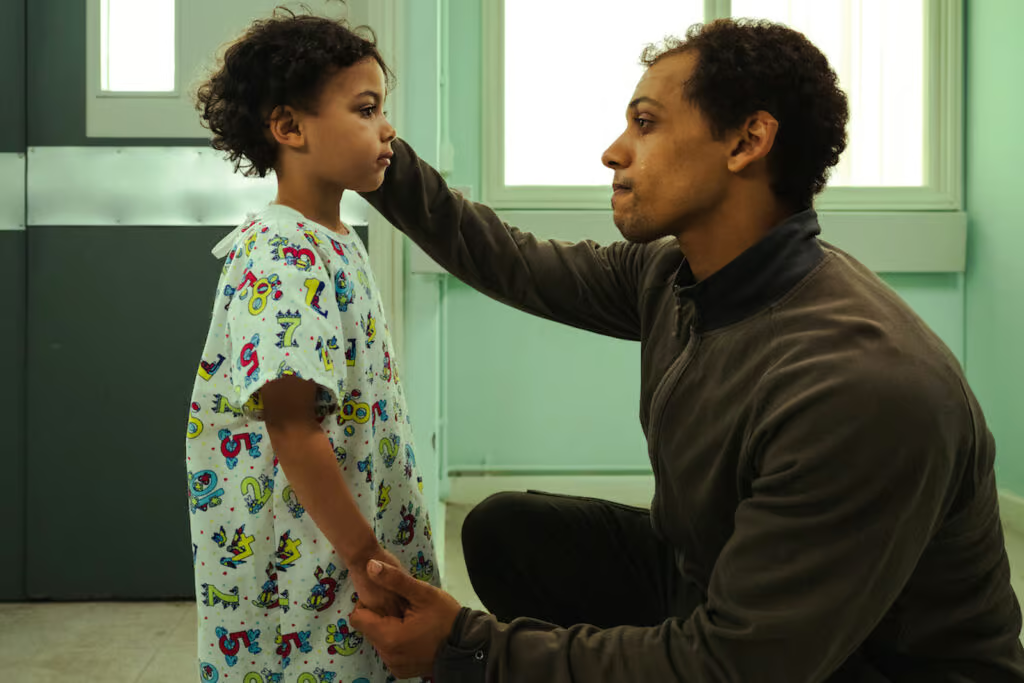
The role of young Alex is played brilliantly by Jahsaiah Williams. Probably his first on-screen performance ever. It never ceases to amaze me whenever a young child plays a challenging character. Williams is very convincing, using subtle changes of mimics, shifting from distant self-absorbance – living in his inner world to survive the trauma – to sudden outbursts.
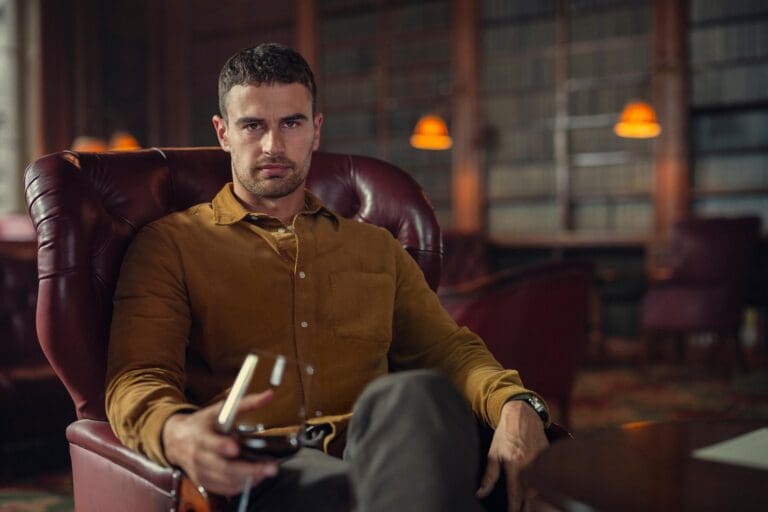
Jordan Bolger as his father André shines too. Since the loss of his sweet Rachel it seems like he sacrifices his own mourning in order to protect and take care of little Alex at any price. They leave London and the media vultures, move to France and later Spain. All so they can be left in peace and move on with their lives.
Basically “The Witness” is a portrait of loss, grief and two widely different ways of dealing with the process
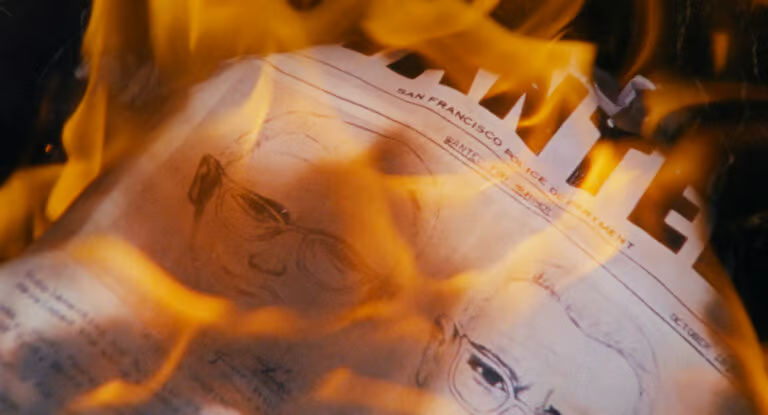
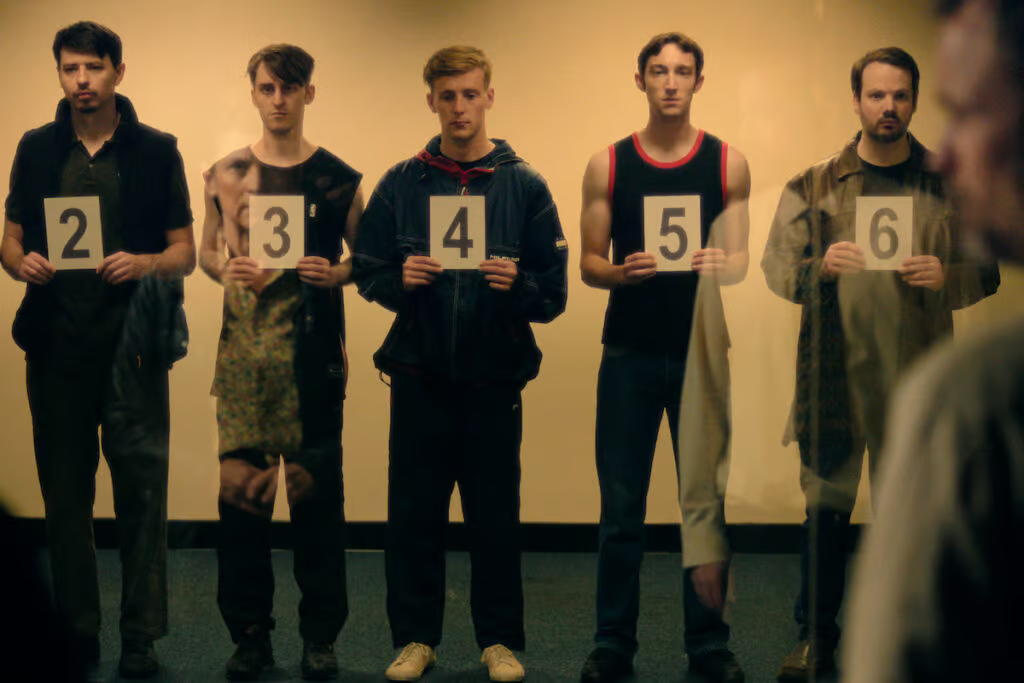
This proves harrowingly tough since the police did a terrible job charging the wrong perpetrator and keeping him in custody for a year. Meanwhile, the real killer walks free and unknown for 13 years before the case is re-opened and the serial rapist and killer Robert Napper is finally brought to justice.
“The Witness” is a journey of atonement
The true story backdrop of this series is tragic beyond words. However, it never revels in graphic details or nightmare replays of that fatal day.
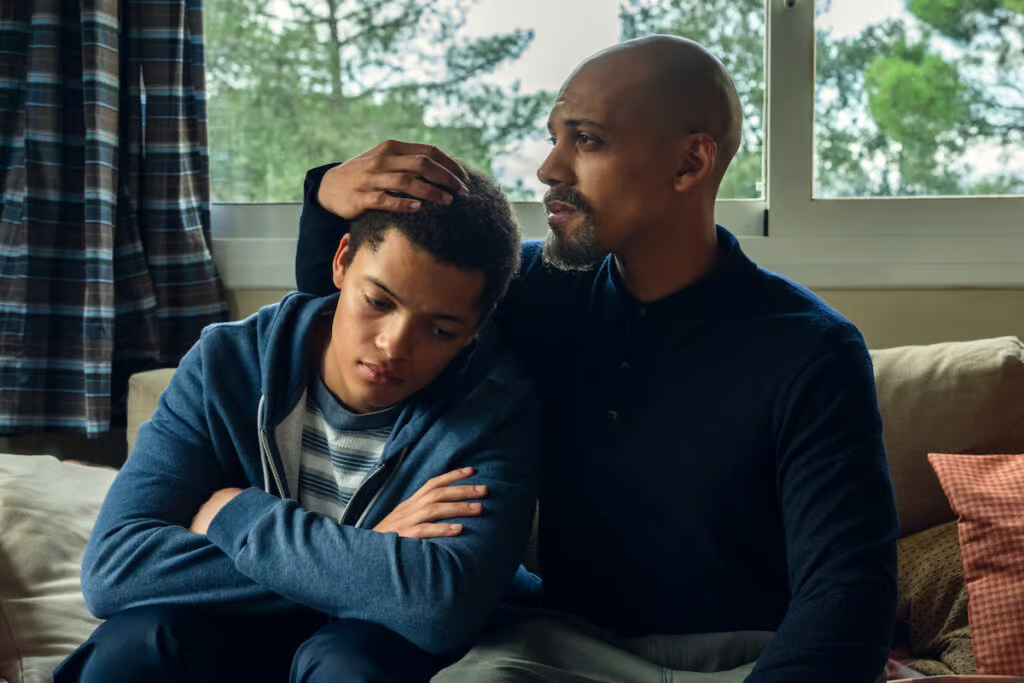
Basically “The Witness” is a portrait of loss, grief and two widely different ways of dealing with the process: The one of the child whose mum is brutally taken from him – before his young eyes. And the one of the father who loses the love of his life and almost himself – immersed in the role of protective sole caretaker.
The process becomes a journey of both individual and mutual atonement for father and son – and it is beautifully displayed in a string of key scenes throughout the three episodes of “The Witness”.